

Caroline Hayward and Alexandra Kemp dissect the new restrictions in Victoria – a first for any Australian jurisdiction – in relation to non-disclosure agreements (NDAs) in workplace sexual harassment cases. Read on for the latest in KWM’s inhouse-centred series: From our inhouse to yours.
The Restricting Non-disclosure Agreements (Sexual Harassment at Work) Bill 2025 passed in December 2025 and takes effect on 20 May 2026. Although the changes do not disturb NDAs made before commencement of the Act, they will fundamentally reshape how confidentiality is used to settle workplace sexual harassment matters in Victoria and will align the state with comparable reforms in the United States, the United Kingdom, Ireland and Canada, which all restrict the use of NDAs in sexual harassment cases to varying extents.
While NDAs have often been used with a victim‑centred rationale, to protect privacy and support closure, many complainants report feeling silenced and isolated. There is growing concern that strict confidentiality can entrench a culture of secrecy, permit perpetrators to move workplaces undetected and reduce incentives for systemic prevention.
The Bill follows the recommendations of the Victorian Ministerial Taskforce into Workplace Sexual Harassment, which called for legislative limits on NDAs in this context.
What does the new law do (and not!) do?
The Bill does not outright ban the use of NDAs but instead regulates the use of NDAs entered in settlement of workplace sexual harassment matters and sets out certain requirements in relation to their use.
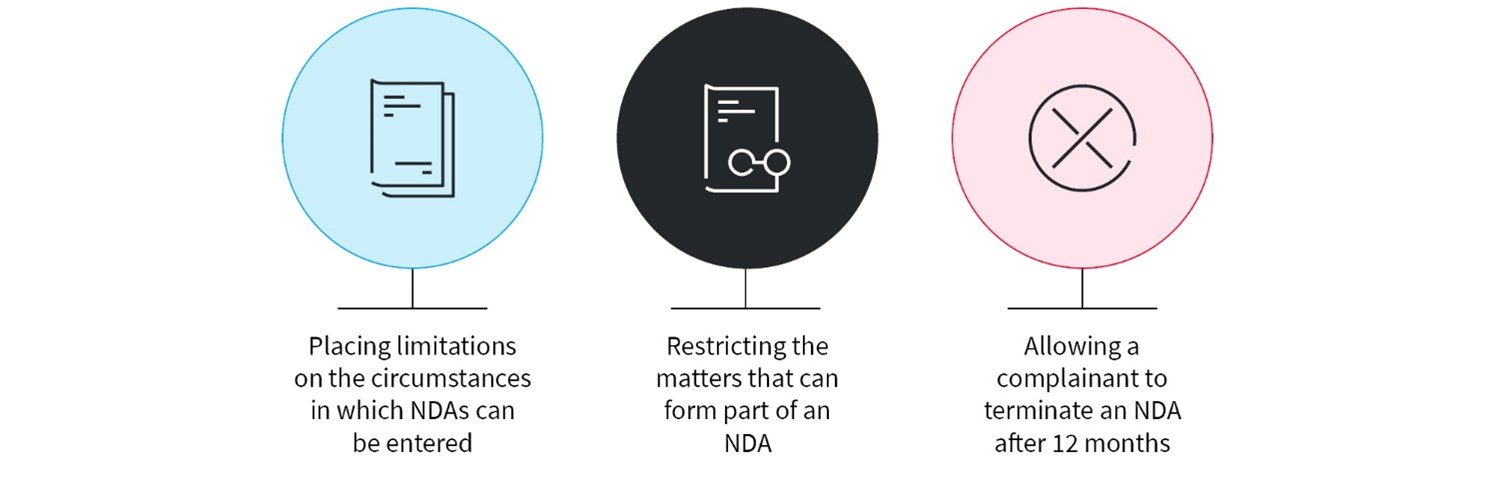
The Bill is intended to reduce the use of NDAs to conceal workplace misconduct and to protect and empower workers who are subjected to workplace sexual harassment, recognising their vulnerability. It does this by:
What is an NDA under the Bill?
NDA is defined broadly. It captures any contract, or agreement that may restrict a person from disclosing information regarding allegations of sexual harassment, including NDAs embedded within settlement deeds.
The concept of “work” is equally broad, extending beyond traditional employment to contractors and other forms of paid or unpaid work. In practice, the breadth in definition means employers, principals, volunteer organisations, and other duty‑holders should assume the regime applies wherever allegations concern conduct “at work.”
What is restricted?
The Bill distinguishes between two types of information about sexual harassment allegations:
- material information includes the identity of the respondent and details of the alleged conduct; and
- protected information includes the amount of any financial compensation and, where a respondent is under 18, the respondent’s name.
This distinction matters because it drives what a complainant can disclose and to whom, even where an NDA is otherwise valid.
How do the restrictions work?
NDAs will only be enforceable if prescriptive preconditions are met. These preconditions, include the following:
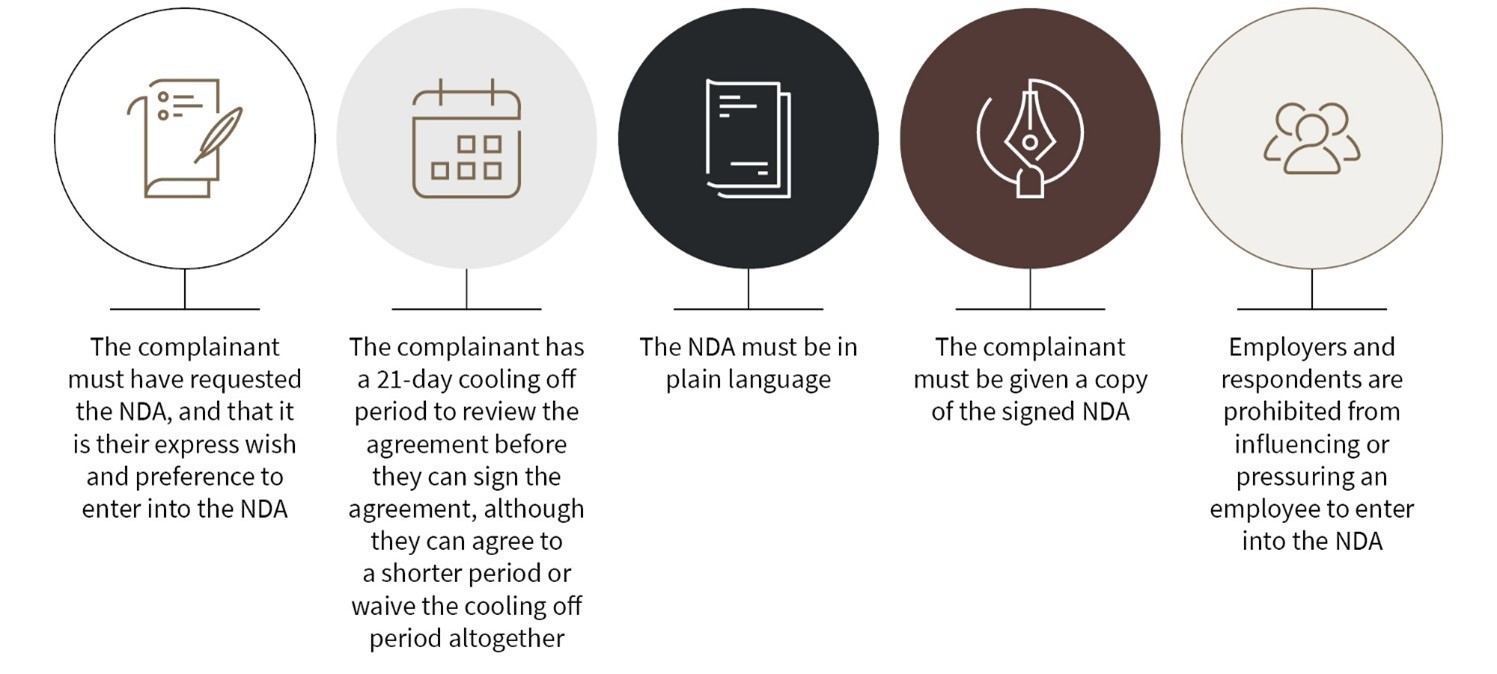
Each of these preconditions must be provided to a complainant before they sign. If the preconditions are not satisfied, the NDA becomes unenforceable.
The regime also reverses the typical enforcement dynamic. A complainant (e.g. the employee) can issue a notice alleging that the preconditions were not met. The onus then shifts to the respondent (e.g. the employer) to apply to the Industrial Division of the Magistrates’ Court within 30 days for orders to the contrary. If no application is made, a breach of the preconditions is assumed, and the NDA is unenforceable.
Importantly, terms requiring a complainant to pay compensation for an alleged breach of an NDA are rendered unenforceable.
Is there a requirement to prove the sexual harassment allegations?
The protections do not require the allegations to be substantiated. However, where an employer substantiates the allegations, any NDA will not prevent that employer from disclosing relevant information to a prospective employer of the alleged perpetrator. This carve‑out is intended to limit the risk of repeat offending through secrecy.
Is there a right to terminate?
A complainant may terminate an NDA on written notice after one year, with seven days’ notice to the other party. This statutory “cooling‑off” period is designed to reduce the long‑term silencing effect of confidentiality while still allowing parties to settle matters promptly.
What should employers consider?
These reforms sit alongside existing obligations under the Equal Opportunity Act 2010 (Vic) and workplace health and safety laws to prevent sexual harassment. Together, they point to the need for a proactive, prevention‑first approach.
For employers, the immediate priorities are to:
- review and update policies, procedures, and reporting channels to ensure they are trauma‑informed and reflect the new NDA requirements;
- provide regular training to people managers, HR professionals, in-house legal teams, contractors, and volunteers, with clear guidance on responding to complaints and managing confidentiality appropriately;
- review settlement strategies and template agreements to comply with the preconditions, consider the material/protected information distinction, and account for the 12‑month termination right; and
- prepare for the new enforcement mechanics, including processes to respond swiftly to notices alleging unmet preconditions.
For insurers and policyholders, the changes may affect coverage terms, risk assessment and claims handling, particularly where confidentiality obligations, notifications and cooperation clauses intersect with the limits on NDAs and permitted disclosures. Policy wording, exclusions and claims protocols should be reviewed to ensure alignment.
Finally, as Georgie Purcell MP observed, enabling survivors to speak is only meaningful if they are heard “without question, without bias, without stigma and without assumption.”
The Bill’s measured approach – regulating rather than banning NDAs – aims to preserve space for privacy where appropriate, while preventing secrecy from undermining safety and accountability at work.
Further information
If you need further guidance on NDAs in your workplace sexual harassment cases, please reach out to Cilla Robinson.
Check out other insights from the Office of General Counsel team here and subscribe to KWM Pulse using the button below to stay across upcoming articles in areas of interest.